

Practical dog training for everyday life
Training should begin as soon as possible, but formal group classes are not appropriate for every dog or every developmental stage.
Dogs are always learning. The sooner we establish and reinforce useful behaviours, the easier everyday life can become for both the dog and guardian.

Training begins before group classes
You do not need to wait for a particular age to begin teaching your dog. From the moment a puppy comes home, they are learning which behaviours gain access to food, attention, play, movement and the environment.
Early training is not about drilling commands. It is about building communication, reinforcing behaviours you want to see again, creating predictable routines and preventing difficult behaviours from being repeatedly practised.
What should young puppies learn?
The early months should include:
- Safe, positive exposure to people, environments, surfaces, sounds and handling
- Engagement and clear communication foundations
- Rest, routine and learning how to settle
- Management that prevents unwanted behaviours from being repeatedly rehearsed
This foundation makes later training easier because the puppy already understands how to learn and communicate with the person at the other end of the lead.
Socialisation is not unlimited dog play
Socialisation does not mean meeting or playing with as many dogs as possible. It means helping a puppy experience the world safely and appropriately.
Puppies should also learn to observe other dogs without greeting them. The quality of an experience matters more than the number of interactions. Poorly chosen or overwhelming experiences can create problems rather than prevent them.
Why Life Skills starts at 5.5 months
The Life Skills Group Program is designed for adolescent and adult dogs. It builds practical everyday skills rather than serving as a puppy preschool.
Younger puppies need a different balance of socialisation, development and training. Puppy Life Skills is The Operant Dog’s five-week puppy school at Bellingen Veterinary Hospital. The program is for puppies aged 8–18 weeks when it begins, with a maximum of five puppies per class. It begins with a dog-free theory class, followed by four practical sessions focused on communication, confidence, thoughtful socialisation and useful everyday foundations.
No prior training foundations are required before Life Skills. During the dog-free Week 1 workshop, guardians learn the training system and receive homework so they can begin teaching the foundations before the dogs attend the practical class.
How do you know whether a dog is ready for group classes?
A dog may be ready when they can take food, respond to their guardian, recover from manageable distraction, work at an appropriate distance and be handled safely in the class environment.
Readiness is not determined by age alone. Complete the Life Skills suitability checker before enrolling to get a better indication of the right starting point.
What if a young dog is overwhelmed or reactive?
Do not simply delay all training and hope maturity fixes the problem. Begin individual training in an environment where the dog can learn successfully.
Reactivity Support can build communication, coping and practical skills that may prepare the dog for group classes later.
Is it ever too late to start?
Training remains possible throughout a dog’s life. Older dogs may have a longer history of practising particular behaviours, so changing them can require more time. Health and physical capability may also affect the training approach.
It is generally easier to establish skills while dogs are young, or young at heart, but age is not a reason to give up. The plan simply needs to suit the dog in front of you.
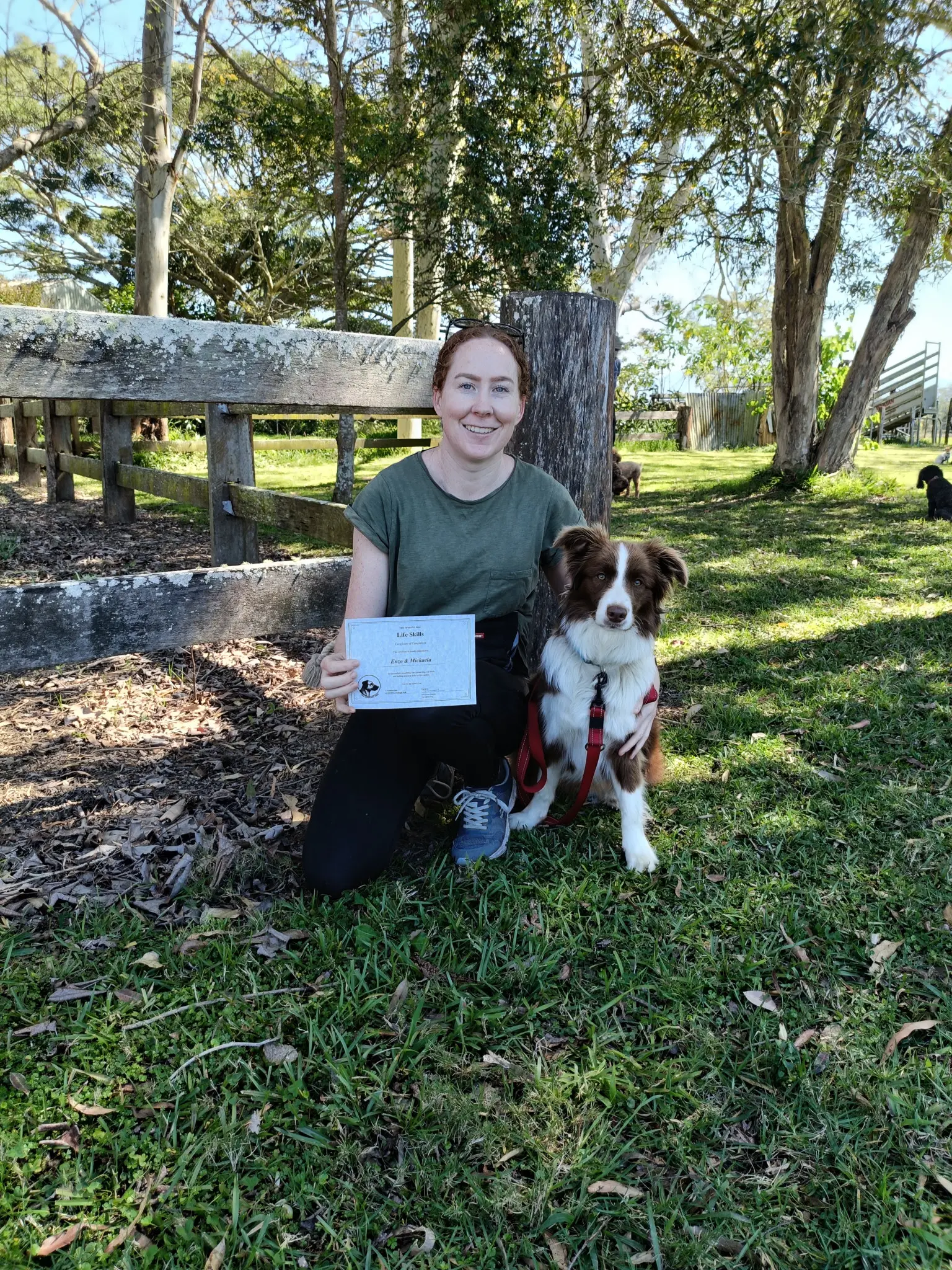
Why waiting can make training harder
Behaviours become stronger through repetition. If pulling, jumping, barking or ignoring the guardian repeatedly works, the dog becomes better at those behaviours.
Read Behaviours Rehearsed Are Reinforced for a deeper explanation of why practice matters.
Another common problem is trying to communicate with the dog through human language without first building a clear training language the dog understands. Repeating more words does not create clarity if those words have never been taught.
Be careful with disconnected online advice
Instagram, TikTok and other online sources can contain useful tips, but they do not necessarily provide a complete training system.
Picking isolated techniques from different trainers can create inconsistent rules and confuse the dog. A coherent system gives both the guardian and dog a shared language and a clear way to progress.