
Practical dog training for everyday life
Group dog training classes are not simply a line of dogs practising commands together. A useful class should teach you a clear training system, help your dog apply familiar skills around real-life distractions, and give you feedback while you work.
At The Operant Dog, group dog training in Coffs Harbour begins with a dog-free workshop followed by six practical sessions. The program has an intentional progression, but the exercises and difficulty are adapted to the dogs in front of us.
Week 1 begins without the dogs
The first workshop is dog-free so guardians can concentrate on understanding the training system without simultaneously trying to manage a dog.
You learn how reinforcement works, how to communicate clearly and how the exercises will be taught. You then take the homework away and begin practising at home. By the time the dogs arrive, you already understand the mechanics and can focus on teaching your dog.
What happens when the dogs arrive?
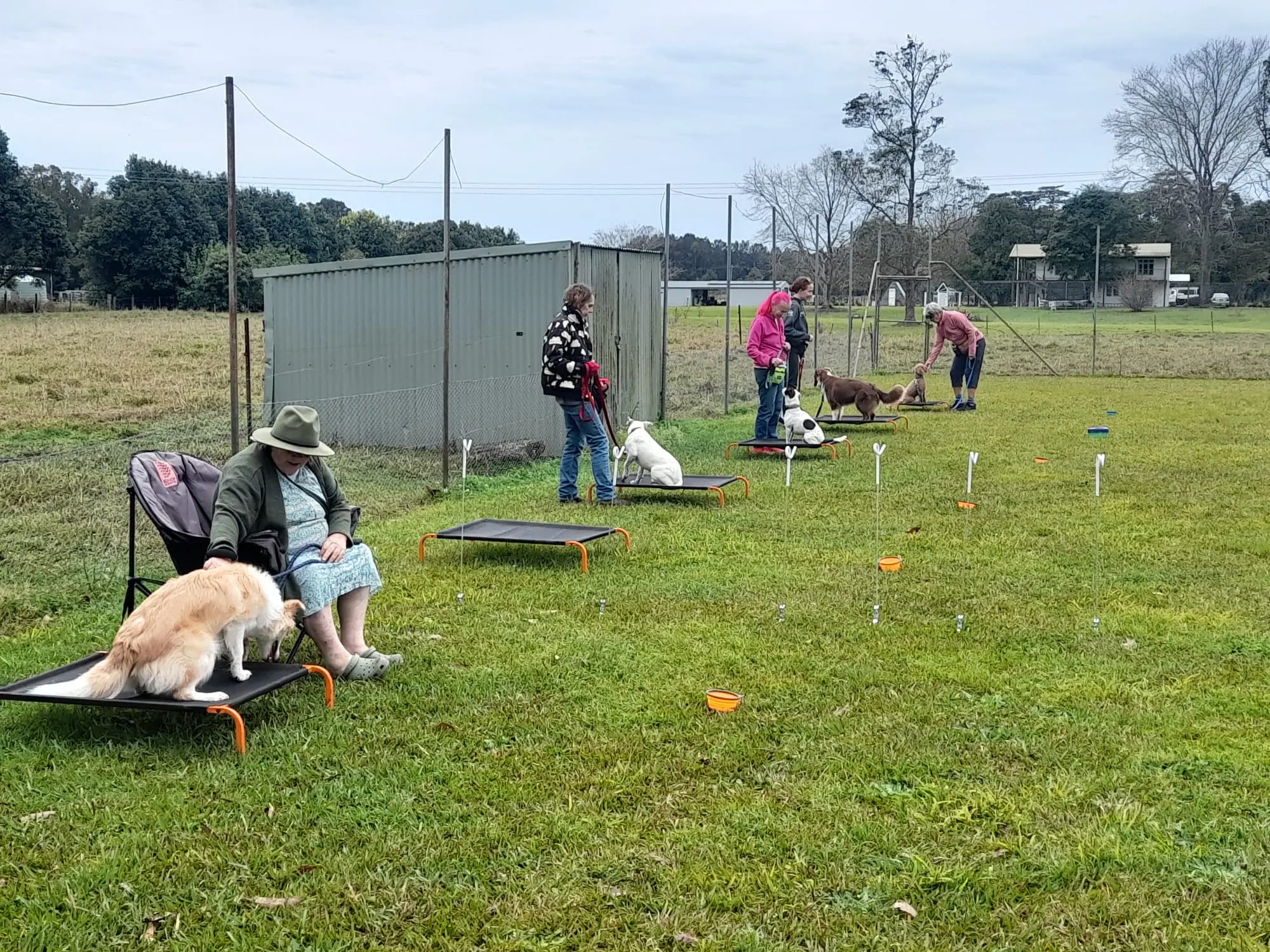
The first practical session depends on the dogs attending. We have plenty of space and use it to our advantage. If a dog is overwhelmed by the sight of another dog, we can add distance or visual barriers rather than placing them under unnecessary pressure.
The dogs begin with familiar, highly reinforcing exercises that they have already practised at home. This helps them learn that they can engage, think and work around other dogs.
Do the dogs interact with each other?
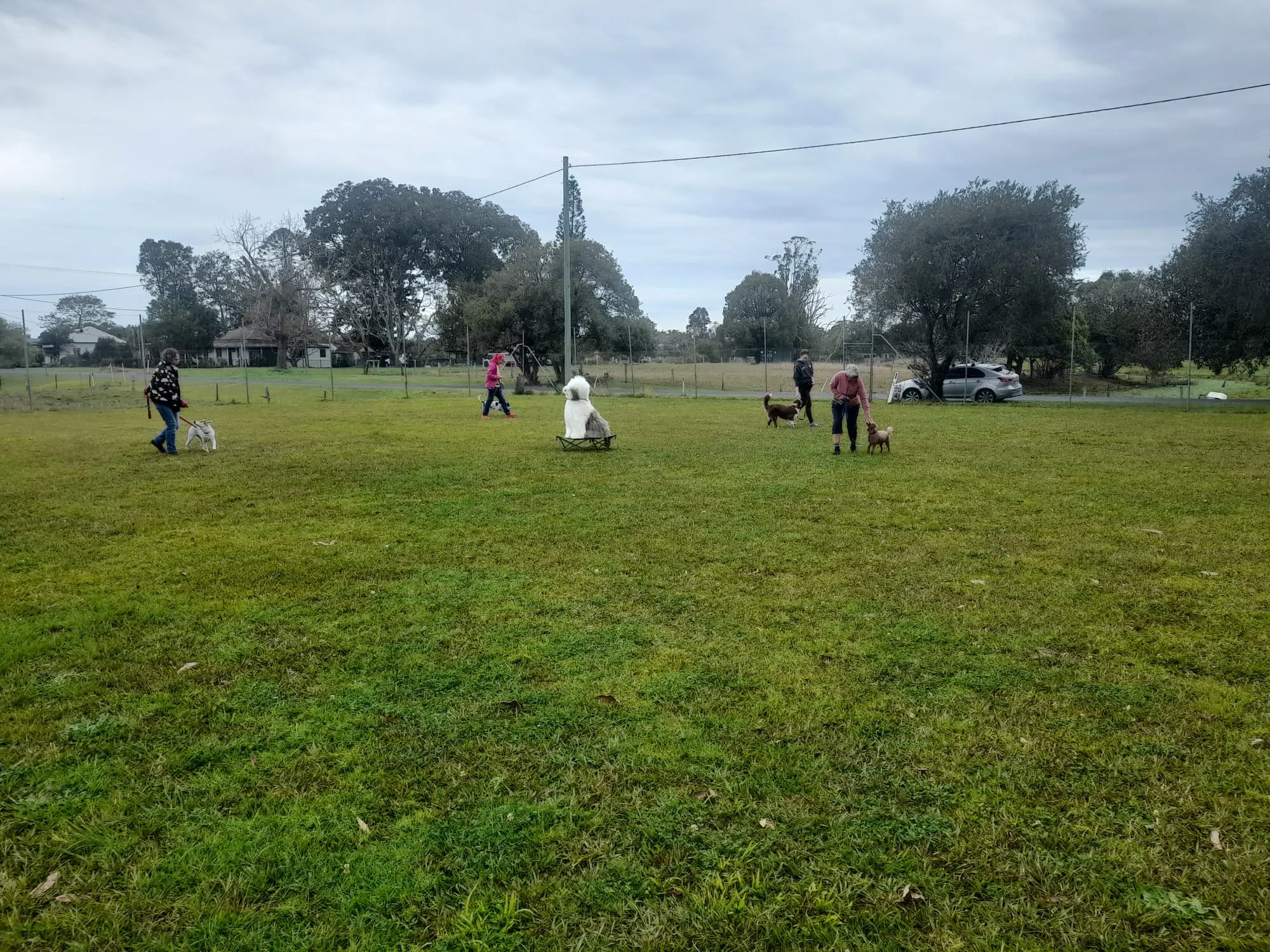
There is no direct dog-to-dog contact during Life Skills. The dogs still see one another and naturally act as distractions for each other. That is useful because other dogs are part of everyday life.
The goal is not to make every dog greet or play. It is to help each dog remain engaged and responsive around other dogs while working safely with their guardian.
How each exercise is taught
I demonstrate each exercise twice. First, I use an invisible dog so I can talk through the mechanics clearly. Then I demonstrate with an actual dog, usually one from the class. During that demonstration I do not talk because my attention stays on the dog.
Guardians then practise while I move around the class and provide individual feedback. Sometimes everyone works on the same exercise. At other times, people alternate activities so the other dogs become controlled, real-life distractions.
The syllabus adapts to the group
Life Skills follows an intentional progression through engagement, lead skills, responsiveness, emotional regulation, proofing and real-life integration. However, the syllabus remains flexible.
If a dog struggles, we might simplify the exercise, create more distance, use a barrier, offer an alternative, take a break or have the dog do something completely different. It depends on the dog and the situation.
This is one of the great benefits of a well-run group class. You receive feedback from a knowledgeable trainer while you are working in the environment where the difficulty occurs.
What happens between classes?
You receive easy-to-follow homework handouts, supporting videos and clear guidance on what to practise. You also have access to help between classes, so you do not have to wait until the next session to ask a question or get support.
A few focused minutes most days can make a meaningful difference. Training can be incorporated into walks, meals and everyday routines rather than treated as a separate hour-long task.
This matters because attending class alone does not create change. The practice between sessions is where the dog begins to understand how the skills apply to normal life.
What should you expect after seven weeks?
The goal is not a perfectly trained dog after seven weeks. You should leave with a clearer communication and training system, practical skills you can continue developing, and a better understanding of your dog.
You should also feel more capable of adjusting an exercise and helping your dog when a situation becomes difficult.
Are group classes suitable for every dog?
No. Some dogs need more distance or individual support before they can learn successfully in a group environment. Suitability depends on the individual dog, not simply whether they have ever barked or lunged.
Use the Life Skills suitability checker to get a better idea of the appropriate starting point. Dogs that need an individual plan can begin with Reactivity Support and may progress into group classes later.